


⚠️ Are You Compliant?
- Tech Painting Co.

- Oct 16, 2025
- 1 min read
Compliance isn’t just a requirement; it’s a responsibility. Over time, paint fades, coatings wear, and markings lose clarity, making it easy for once-compliant areas to fall out of standard.
Regular maintenance of ADA and OSHA-regulated markings helps ensure that parking areas, walkways, and interior spaces remain safe, accessible, and inspection-ready.

ADA Accessibility
Proper markings support safe navigation for all visitors and help meet accessibility standards.
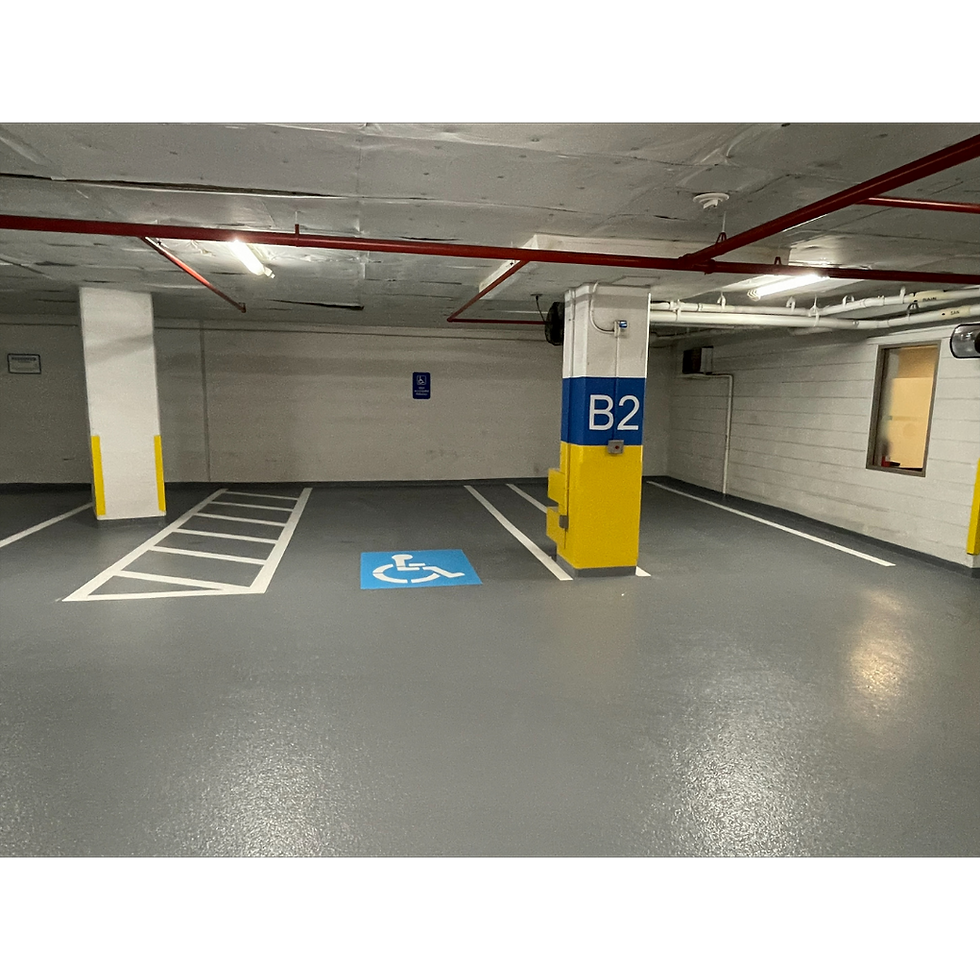
Parking lots and garages – Verify ADA stall sizes, striping contrast, and symbol visibility
Accessible routes and crosswalks – Ensure clear pathways, curb ramps, and transitions
Slip-resistant surfaces – Maintain traction in high-use pedestrian areas
Signage and labeling – Confirm height, color contrast, and legibility requirements

OSHA Safety Standards
Clear markings reduce workplace hazards and improve emergency readiness.
Interior workspaces and warehouses – Maintain defined walkways, loading zones, and equipment areas
Color coding – Use OSHA-approved colors to identify hazards, caution areas, and safe zones
Mechanical and utility areas – Label piping, emergency shutoffs, and restricted zones
Floor coatings and striping – Keep markings visible to guide movement and prevent accidents
Maintaining visibility, organization, and adherence to code reduces risk, improves accessibility, and upholds the professional appearance of your property.
🧠 Did You Know?
The ADA requires accessible parking spaces to have clear, visible striping and
signage, and faded markings can lead to failed inspections.
OSHA estimates that clear floor markings and hazard color coding reduce workplace accidents by up to 25%.
Routine repainting and inspection cycles help maintain compliance year-round, especially in high-traffic or outdoor areas exposed to weather.


Comments